 EN
EN  DE
DE 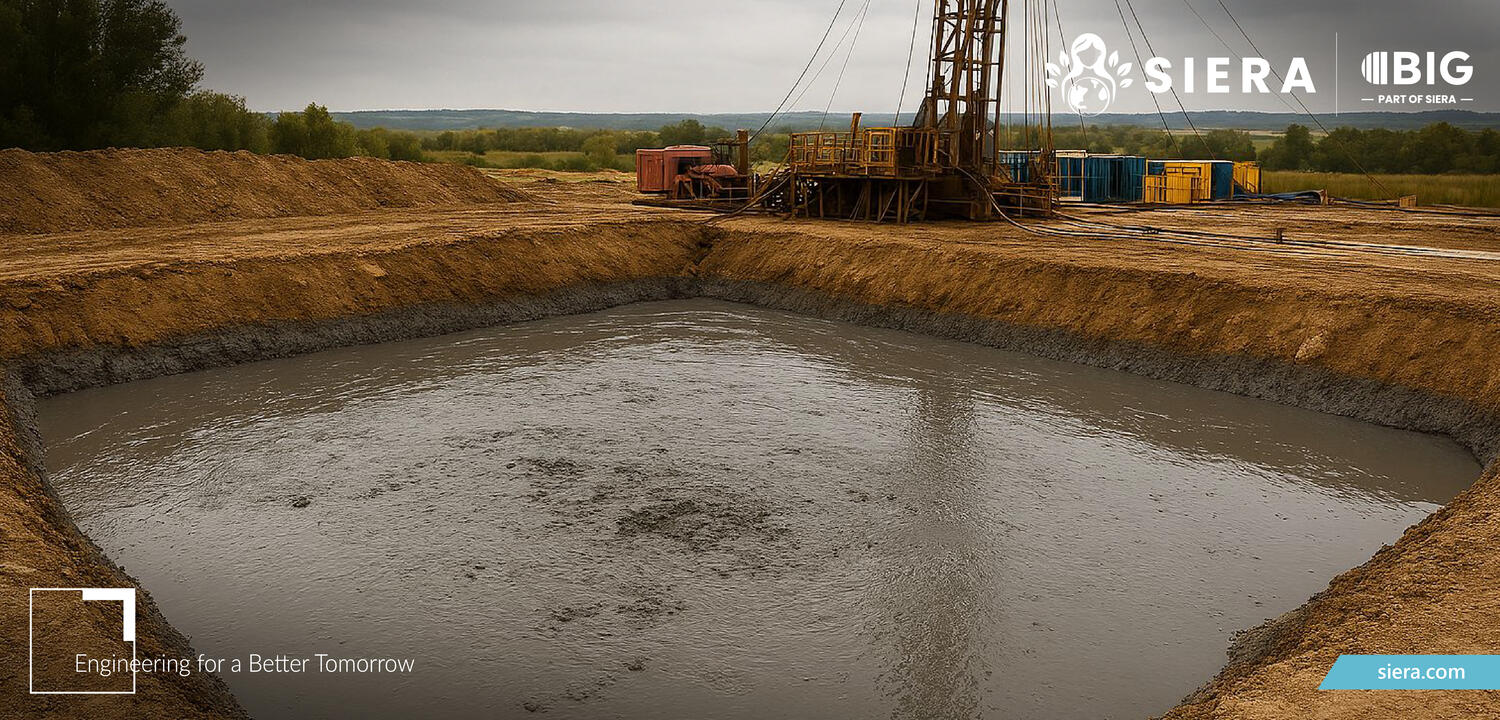
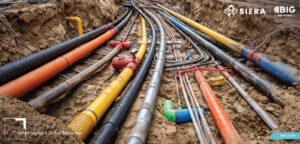
The expansion of digital infrastructure is progressing rapidly in Germany. Horizontal drilling is a preferred method for laying fibre-optic cables – it is gentle on the ground and efficient to carry out. However, this process presents a waste disposal problem that has long been underestimated: drilling mud. A flagship project in the district of Uelzen demonstrates how this waste can be managed in a way that is compliant with the law, cost-effective and, at the same time, sustainable. For Prof. Burmeier Ingenieurgesellschaft mbH (BIG) – part of the network of SIERA – this environmental engineering project is a clear example of how technical innovation and the circular economy can work together.
The problem: drilling mud with no disposal route
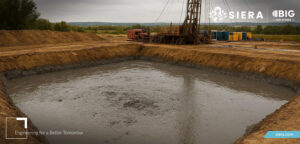
Horizontal drilling has been supporting the expansion of the fibre-optic network in the district of Uelzen for several years. However, this advantageous method of laying cables generates considerable quantities of drilling slurry – waste that is subject to the requirements of the Circular Economy Act (KrWG). Without proper treatment, it may neither be recycled nor disposed of.
On-site infiltration is just as prohibited as the long-standing practice of spreading the slurry on agricultural land. In a decree dated 7 August 2015, the Lower Saxony Ministry for the Environment, Energy and Climate Protection expressly prohibited the uncontrolled disposal of drilling slurry from horizontal boreholes, which had been the practice until then. In Lower Saxony, even for uncontaminated drilling mud, only a few treatment facilities were available, meaning that disposal was associated with high transport costs and significant traffic emissions.
The question remained: so where should the sludge go?
The approach taken by AWB Uelzen
The search for a legally compliant and proportionate disposal method prompted the Uelzen District Waste Management Authority (AWB) to tackle the problem using its own resources. Given the locational advantage of its own Class II landfill site at the Borg Waste Management Centre, the AWB considered disposing of the mineral-rich drilling sludge on site in 2018.
Following a market analysis, AWB identified Max Wild, a company based in Baden-Württemberg, as a technology partner capable of combining the treatment of drilling muds with the recovery of the drilling suspension. This dual effect and the tailored treatment processes proved convincing because they are specifically designed to address the particular properties of the drilling mud.
As well as reducing disposal costs, the positive impact on the environmental footprint also played a decisive role:
- Shorter transport routes reduce traffic congestion and CO₂ emissions
- The processing of waste for recovery closes the material cycles
- Landfill capacity is conserved in the long term
These environmental benefits prompted the district’s executive committee to give the go-ahead for the investment in 2018. The project involved costs of €1.4 million for the plant and €400,000 for the infrastructure.
A facility that is unique in Germany
Since September 2019, AWB has been operating a multi-line plant configuration at the Borg Waste Management Centre – the first of its kind in Germany at the time. At the heart of the concept is a sophisticated „upcycling“ process: drilling mud is transformed into valuable material streams for new uses – an achievement that is impressive from both a technical and an environmental perspective.
It is particularly noteworthy that the AWB operates entirely on self-generated energy. The innovative plant technology is powered exclusively by electricity generated on site from biowaste – a flagship project that puts sustainability into practice.
Prof. Burmeier Ingenieurgesellschaft mbH (BIG) – as part of the SIERA-Network – in this project, a compelling example of how environmental engineering and resource-efficient technologies can work together to create effective solutions to complex waste management issues.
The treatment process in detail
Depending on the intended use, drilling muds undergo various stages of processing. This multi-stage process ensures that the valuable components of the drilling mud can be optimally recovered and utilised:
| Stage of the proceedings | Function |
| 1. Screening | Separation of drill cuttings |
| 2. Centrifuge | Separation of coarse mineral particles |
| 3a. Mixing station (optional) | Treatment of a secondary rinse |
| 3b. Flocculation station & lamella clarifier (optional) | Sedimentation of the particles |
| 4. Conditioning | E.g. the manufacture of concrete blocks or improving their recyclability |
| 5. Wastewater treatment | Treatment of process water generated |
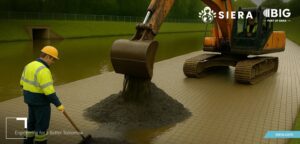
This process generates valuable material streams from the drilling mud: the plant is capable of recovering the drilling suspension for reuse and of conditioning the components that can no longer be used in the drilling process so that the mineral solids can be recycled. From the perspective of Prof. Burmeier Ingenieurgesellschaft mbH (BIG) – within the SIERA-Network – it is precisely this process structure that illustrates how sophisticated plant technology and the circular economy interlock in practice.
Relevance to environmental engineering and the circular economy
This project serves as a prime example of how technical solutions and legal requirements can be brought together in a constructive manner. The facility at the Borg waste management centre demonstrates that the circular economy is not merely a theoretical concept, but can be implemented in practice and be economically viable. For Prof. Burmeier Ingenieurgesellschaft mbH (BIG), which, in the field of environmental engineering, in collaboration with SIERA The project, which is currently underway, is providing groundbreaking insights into sustainable infrastructure planning.
It is particularly important that drilling muds no longer end up as waste with an unknown fate, but are specifically treated and channelled into new cycles of use. This approach is groundbreaking from both a waste management and an environmental perspective.
Outlook: Potential not yet fully realised
Even after the completion of the fibre-optic network in the district of Uelzen, the Borg landfill site will remain of great importance as a location for drilling mud treatment. It offers other project developers planning and disposal certainty for future horizontal drilling projects.
Nevertheless, the plant’s operations have so far fallen short of their potential – both in terms of capacity utilisation and the further development of the circular economy. Drilling mud from horizontal drilling operations is evidently still frequently being disposed of via unknown channels. Significant potential could be realised through broader networking and targeted awareness-raising amongst project developers.
The AWB Uelzen project impressively demonstrates how a complex waste management problem can be transformed into an innovative and sustainable solution. The treatment plant at the Borg Waste Management Centre – the only one of its kind in Germany – combines technical excellence, environmental responsibility and economic viability in an approach that should set a precedent.
This flagship project highlights how environmental engineering can help to firmly embed the circular economy in infrastructure planning and implement innovative waste management solutions in a practical manner – an ambition that Prof. Burmeier Ingenieurgesellschaft mbH (BIG), as part of SIERA, consistently applied in every project.
Are you facing similar waste management challenges in your project? Get in touch with Prof. Burmeier Ingenieurgesellschaft mbH (BIG) – within the network of SIERA – and find out how our team of experts can help you with your next sustainable solution.
Engineering for a Better Tomorrow