 EN
EN  DE
DE 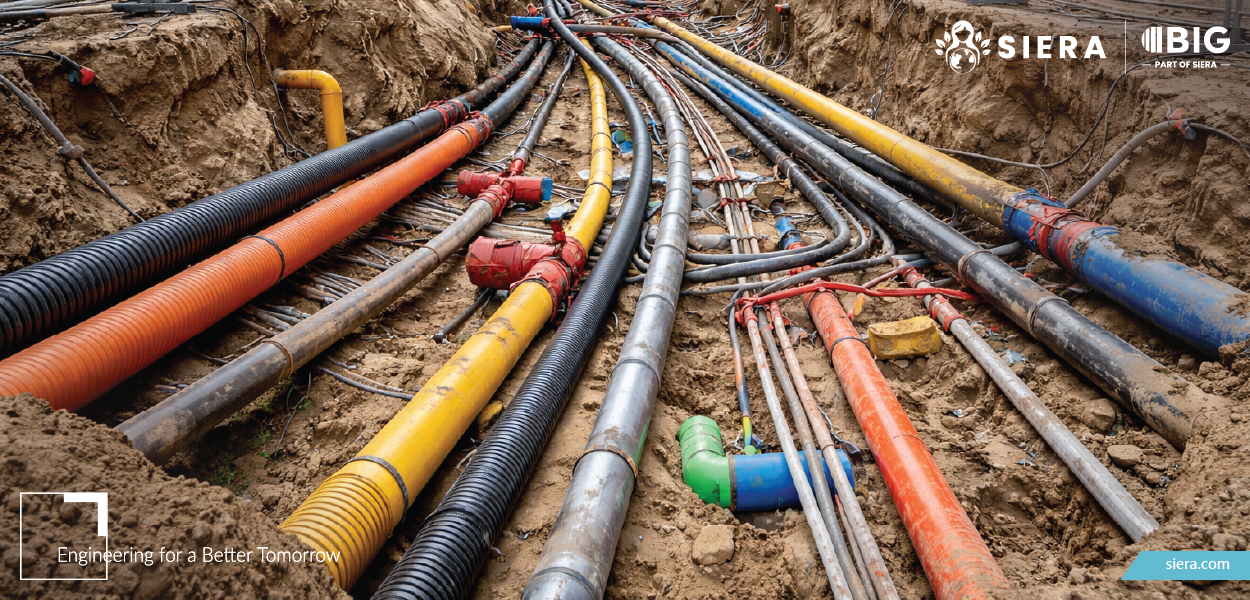
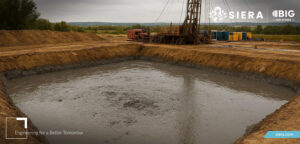
Soil and groundwater exploration involves interfering with the soil to a not inconsiderable extent, e.g. by sinking small pile-driven boreholes and dynamic probing, setting pile-driving levels or digging trenches.
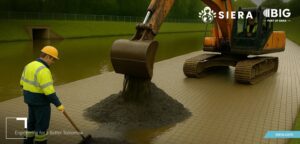
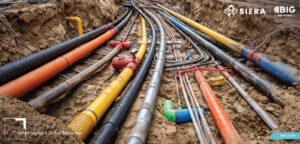
For the Prof. Burmeier Ingenieurgesellschaft mbH (BIG) - Part of SIERA In civil engineering, it is particularly important to consider possible lines, cables and ducts at an early stage. This is because, in case of doubt, these may still be live or pressurised and, if damaged during excavation work, could endanger employees and/or lead to high consequential costs.
True to the motto „It's dark before the hoe“, only a limited statement can be made about drilling obstacles during ground interventions. Drilling obstacles occur in the form of boulders, building rubble, excavations, etc.
For this reason, a line enquiry should be made before starting exploratory measures in order to rule out possible damage to lines or to relocate starting points appropriately.
The pipeline research in the study area
Researching the network or pipeline operator responsible for an investigation area is usually very time-consuming.
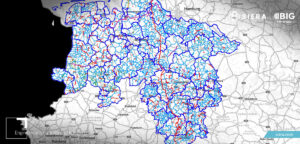
The nationwide information system for line research (BIL) makes it possible to submit line enquiries to a large number of network operators at the same time.
Based on the enquiry information, BIL generates a legally validated positive and negative list. The operator remains in charge of the impact assessment. The operator's planning information system generates the relevant information for the enquirer. BIL does not hold any data itself.
How the BIL portal supports
The users of the BIL platform receive information on whether and where in the study area lines are affected by the planned measures, based on the feedback from the network operators to BIL.
Procedure of the enquiry
- Submit a line enquiry
The enquiry is submitted on the basis of the information on the study area. - Check responsibility
BIL identifies the responsible network or line operators. - Generate positive and negative list
A legally validated list is created on the basis of the enquiry information. - Impact assessment by the operator
The operator checks his own involvement. - Feedback via the portal
The relevant information is transmitted to the enquirer via the BIL portal.
Advantages for BIG in civil engineering projects
The centralised line information via BIL supports BIG - Part of SIERA in the safe preparation of exploratory measures.
Advantages at a glance
- Central enquiry to many network operators
- Legally validated positive and negative list
- Up-to-date database through operator maintenance
- Less risk during earthworks
- More efficient project preparation
Overview: Line information with BIL
| Line enquiry with BIL | Benefits for BIG |
| Central enquiry to network operators | Time saving |
| Legally validated positive and negative list | Clear feedback |
| Impact assessment at the operator | Reliable responsibility |
| No own data storage by BIL | Current information |
| Feedback on affected lines | Protection against damage and consequential costs |
Before starting exploratory measures, a line enquiry is an important step in order to rule out possible damage to lines or to relocate starting points accordingly.
For BIG - Part of SIERA offers the BIL portal a centralised, structured and up-to-date option for submitting pipeline enquiries to many network operators. Users of the BIL platform receive feedback on whether and where lines in the area under investigation are affected by the planned measures.
In this way, BIL supports the safe and efficient preparation of soil and groundwater exploration projects.
Take advantage of the centralised pipeline enquiry via the BIL portal before you start your exploratory measures. This allows you to reduce risks, improve processes and prepare projects more reliably.
Visit now: bil-leitungsauskunft.de
Engineering for a Better Tomorrow