 EN
EN  DE
DE 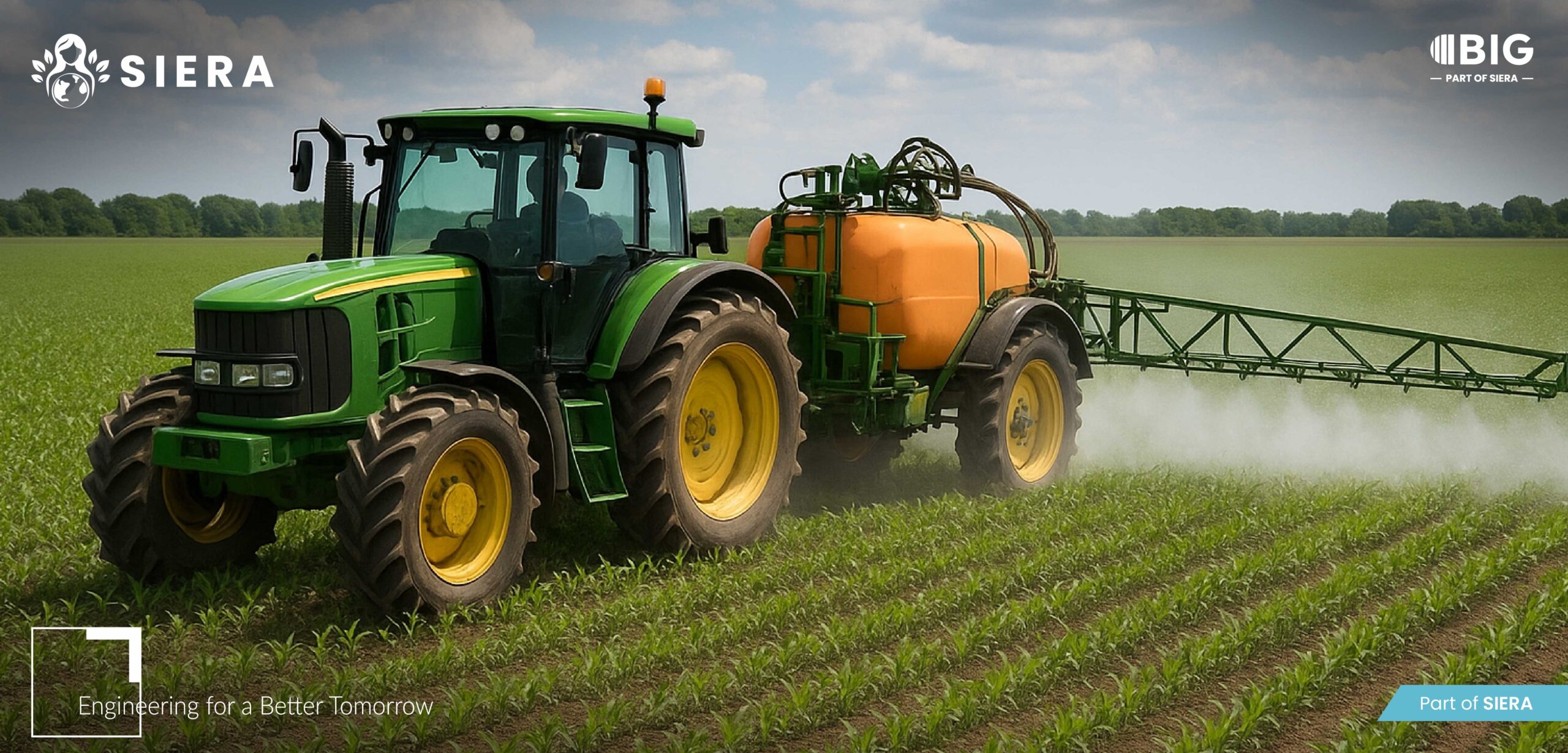
Plant protection products (PPPs) have been a key tool in agricultural production for many decades. They protect plants from diseases, pests and unwanted competing vegetation. At the same time, they are released directly into the environment in large quantities. This makes an expert assessment of their effect on soil, surface water and groundwater indispensable.
Prof. Burmeier Ingenieurgesellschaft mbH - a member of the SIERA Alliance - analyses the topic from a technical, chemical and hydrological perspective within the framework of environmental engineering. The aim is to analyse entry paths, correctly classify risks and develop well-founded measures for sustainable environmental management. This claim follows the guiding principle of the SIERA Alliance: Engineering for a Better Tomorrow.
Classification and significance of plant protection products
Plant protection products include chemical and biological agents that are intended to protect plants from pests, diseases or unwanted accompanying vegetation. They are used in a wide variety of crops and are an essential part of modern cultivation.
On average, around nine kilograms of these substances are applied to agricultural land per hectare. No other chemical substance is introduced into the environment in comparable quantities. This results in special requirements for the assessment of short and long-term effects.
As PPPs are toxic to the respective target species, there is a fundamental possibility that other organisms may also be affected. Many biological functions within ecosystems can also be affected - depending on the active ingredient, dosage, application conditions and site factors.
Pathways of entry: How PPPs reach soil and water
Plant protection products enter the environment via various routes. These entry pathways differ in terms of their spatial impact area and the speed at which substances are transported to downstream environmental areas.
Drift during application
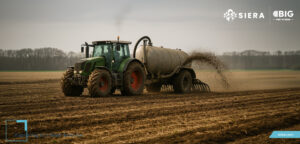
During the spraying process, fine droplets can be blown away by the wind. As a result, they reach areas that were not originally intended to be treated. This transport takes place directly during application and often affects neighbouring areas.
Run-off after precipitation
Rain events, especially heavy rainfall, can lead to PPPs being removed from the soil surface. They enter ditches, streams and other bodies of water via surface runoff. This process can lead to high concentrations in the short term, especially on areas with low infiltration.
Transport via drainage systems
In drained agricultural areas, dissolved substances are transported directly into receiving waters through the pipe system. This creates a rapid, almost uninfluenced transmission path that can increase pollution in surface waters.
Infiltration and transport into deeper soil layers
PPPs and their degradation products can be transported with the leachate into deeper soil zones. Depending on the soil texture, permeability and hydrological properties, it is possible that they may penetrate into the groundwater.
These four transport mechanisms make it clear that substance inputs occur both horizontally and vertically and that their effect can extend beyond the actual application site.
Mode of action, risks and degradation behaviour
Plant protection products exert their effect by specifically influencing biological processes. This primarily affects the target organisms, but can have unintended effects on other groups of organisms.
In addition, many active ingredients only slowly off. As a result, residues remain in the environment for long periods of time. This means for soil and water:
- Some banned substances are less detectable due to reduced use.
- Authorised active substances and their degradation products, on the other hand, remain constantly detectable.
- In many regions, the data basis is restricted by limited measuring points.
- The detection limits are often above the concentrations that would be relevant for ecological assessments.
- In-depth investigations often reveal higher loads than originally assumed.
These findings underline the need to realistically assess exposure, transport and degradation behaviour.
Objectives and developments in agricultural policy
The current agricultural policy aims to reduce the use and risk of hazardous plant protection products by 2030. by 50 %. This goal emphasises the urgency of reducing the quantities of active ingredients, promoting alternatives and further expanding monitoring.
This means for environmental engineering:
- More precise assessment of substance inputs
- Realistic assessment of degradation processes
- Technical developments in the field of measurement and analytics
- Recommendations for reducing stress
Significance for soil and groundwater protection
Soil and groundwater are key assets that play an important role in the work of Prof. Burmeier Ingenieurgesellschaft mbH - a member of the SIERA Alliance. The analysis of PPP inputs requires:
- Reliable chemical analyses
- hydrological understanding
- Consideration of local site conditions
- Comprehensible evaluation of the results
This systematic approach is the only way to realistically assess risks and derive measures that guarantee long-term protection.
Conclusion
Plant protection products are indispensable components of modern agriculture, but pose clear challenges for soil, water and ecological systems. The combination of different entry pathways, a broad spectrum of action and sometimes slow degradation behaviour makes the assessment complex.
The Prof. Burmeier Ingenieurgesellschaft mbH - Member of the SIERA Alliance - uses technically sound analyses and a holistic approach to help identify burdens, realistically assess risks and develop sustainable solutions - in the interests of Engineering for a Better Tomorrow.
Prof. Burmeier Ingenieurgesellschaft mbH - a member of the SIERA Alliance - is available at any time for comprehensive assessments of PPP inputs, their transport mechanisms and the resulting risks.
Contact our team for expert support and competent analyses of your projects.