 EN
EN  DE
DE 
The quality of our water resources is a key indicator of the condition of ecosystems and sustainable land use. In Germany and Europe, the monitoring of nitrate concentrations in groundwater and surface waters plays a crucial role in assessing the impact of agricultural activities and developing suitable water protection measures.
Analysing and reducing nitrogen emissions is also becoming increasingly important in the field of environmental technology. Here, companies such as BIG - Part of SIERA Alliance make an important contribution to the assessment of environmental impacts and the development of sustainable solutions.
The nitrogen monitoring system
The Federal Ministry for the Environment, Nature Conservation, Nuclear Safety and Consumer Protection and the Federal Ministry of Food and Agriculture publish a nitrate report every four years. The current Nitrate report 2024 assesses nitrate pollution in groundwater on the basis of measurements from 679 monitoring sites of the EU nitrate monitoring network.
In addition to the groundwater Surface waters with regard to their exposure to nutrients. This is based on data from 316 measuring points of the LAWA monitoring network (Länderarbeitsgemeinschaft Wasser).
The aim of this monitoring is to evaluate the effectiveness of measures to reduce nitrogen inputs into water bodies. This includes, among other things:
- the cultivation of catch crops
- the reduction of mineral fertilisers
- the expansion of organic farming
The evaluation is carried out within the framework of the EU Nitrates Directive (Directive 91/676/EEC), which aims to protect water bodies from nitrate pollution from agricultural sources.
Political measures and regulatory developments
Germany has been facing challenges for years in complying with the limit values for nitrate in groundwater. Due to persistent exceedances, the European Commission initiated infringement proceedings against Germany in 2017. in.
In response to this, the Fertiliser ordinance revised, which in the May 2020 came into force. Due to the burden on agricultural businesses during the COVID-19 pandemic, its implementation was initially postponed until January 2021 suspended.
The revised regulation aims to achieve this,
- control the use of fertilisers more precisely
- reduce the amount of mineral fertilisers
- improve the protection of groundwater.
Current nitrate pollution in groundwater
Although the nitrate concentrations in German groundwater show a slight improvement, however, continue to lie in many regions above the target limit values.
In the Reporting period 2020-2022 the threshold value of 50 mg/l nitrate in 25.6 % of the measuring points exceeded.
By comparison, this share in the previous period was 2016-2019 at 26.6 %.
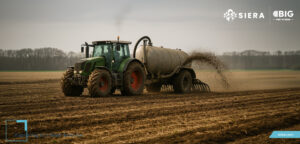
Most exceedances occur in regions characterised by agriculture on. In areas with predominantly Residential development or forest areas elevated nitrate concentrations are detected much less frequently.
On the positive side 51.2 % of the measuring points meanwhile as slightly contaminated or uncontaminated apply. The average nitrate levels there are below 25 mg/l. In the previous reporting period, this share was 49,6 %.
In addition Decreasing nitrate concentrations at 34.4 % of the measuring points a significant increase compared to the previous year 23.0 % in the previous period. These improvements occurred particularly frequently at measuring points where values previously exceeded 50 mg/l were measured.
Overview of the groundwater monitoring results
| Indicator | 2016-2019 | 2020-2022 |
| Measuring points above 50 mg/l | 26,6 % | 25,6 % |
| Measuring points below 25 mg/l | 49,6 % | 51,2 % |
| Measuring points with falling nitrate levels | 23,0 % | 34,4 % |
Nitrate concentrations in surface waters
In addition to the groundwater Surface waters analysed. The nitrate values were analysed as annual averages and then calculated for the period 2020-2022 summarised.
The results show:
- No measuring point exceeded the limit value of 50 mg/l nitrate
- 77.2 % of the measuring points were below 25 mg/l
Overall, the Distribution of nitrate concentrations in surface waters largely stable compared to previous reporting periods. This indicates that although the situation has not deteriorated any further, no comprehensive improvements are yet recognisable.
Challenges in the evaluation of long-term trends
Despite the slight improvement in nitrate levels in the groundwater No clear long-term trends at present derive.
This is mainly due to two factors:
- Restructuring of the groundwater monitoring network
- the long periods of nitrogen cycles in the soil and groundwater
Nitrogen compounds can be stored in the soil for many years and are often delayed in reaching the groundwater. Therefore Effects of political measures often only measurable after a long time.
In order to evaluate long-term developments, more and more Modelling approaches used.
Modelling of nitrogen flows
Pure measurement data is often not sufficient to fully understand the complex processes of nitrogen transport. Therefore hydrological models for use.
These take into account, among other things:
- Nitrogen and phosphorus inputs from agriculture
- Transport processes in the soil
- Residence times in groundwater
- Flow dynamics of groundwater bodies
With the help of such models Estimating nitrogen losses from the topsoil, Analysing groundwater flows and the Evaluate the effectiveness of measures to reduce exposure.
In future, environmental analyses are likely to be supplemented by the following developments:
- Extended measuring networks
- Improved modelling procedures
- more precise estimates of the fertiliser requirements of different farm types.
Contribution of environmental engineering
The protection of groundwater resources is a long-term challenge that requires both scientific analyses and practical engineering solutions.
As part of the „Engineering for a Better Tomorrow“ initiative, companies in the SIERA Alliance are committed to the protection of natural resources and the sustainable use of environmental resources.
Nitrate is just one of many environmentally relevant substances that can pollute water bodies. Overcoming these challenges requires interdisciplinary approaches that combine monitoring, modelling and sustainable agriculture.
Companies like BIG - Part of SIERA Alliance contribute to a better understanding of environmental processes and the development of long-term strategies for sustainable resource management.
Outlook
The current nitrate report shows that Initial improvements in groundwater quality, but at the same time makes it clear that considerable challenges exist.
As nitrogen processes in the soil and groundwater are very slow, it is possible that political measures often only show measurable effects after many years.
In order to ensure the long-term protection of our water resources, it is therefore necessary to
- Continuous monitoring
- Improved modelling
- sustainable agricultural practices are crucial.
The goal can only be achieved through close co-operation between agriculture, politics, science and environmental technology, secure clean water for future generations.
The sustainable protection of our water resources requires sound expertise, innovative technologies and close co-operation between science, politics and practice.
As BIG - Part of SIERA Alliance we support companies, public institutions and project sponsors in analysing complex environmental processes and developing sustainable solutions in the field of environmental technology and water protection.
Would you like to find out more about our services in the field of environmental engineering and water resource management?
👉 Visit our website and discover our projects and services:
BIG Hanover
Or find out more about the international network of SIERA Alliance and our joint initiatives for sustainable engineering solutions.