 EN
EN  DE
DE 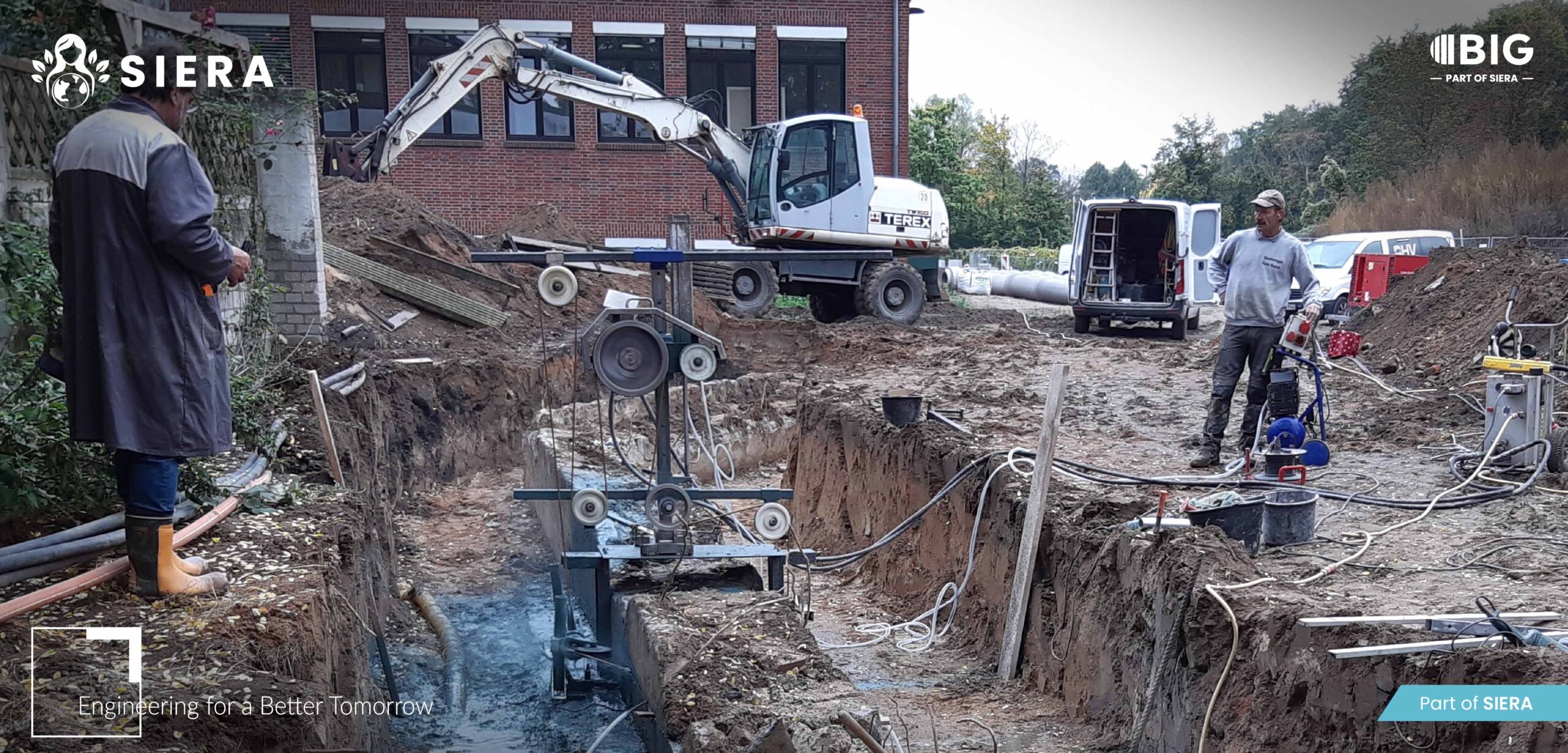
Technical background and area of application
Sealing walls are frequently used in specialised civil engineering as part of the remediation of contaminated sites and site protection. These structures play a key role in protecting groundwater and surface water from pollutants. In the event of subsequent remodelling or changes of use of previously secured sites, it may be necessary to adapt existing sealing walls in the near-surface area. The following technical contribution from BIG- Member of the SIERA Alliance explains the technical principles, material properties and suitable methods for the subsequent shortening of sealing wall heads.
Use of sealing walls for securing contaminated sites
When remediating and securing contaminated sites, so-called sealing walls are used to encapsulate and shield the contaminated soil area in the groundwater-saturated zone as a vertical barrier with low hydraulic permeability. The inflowing groundwater can therefore no longer pass through the quasi-impermeable sealing wall and is channelled around the contaminated site. Similarly, contaminated water from the area enclosed by the sealing wall can no longer reach the outside, form a plume of pollutants and contaminate groundwater or surface water further downstream.
Method and material: Single-phase sealing wall
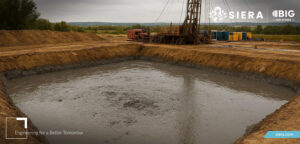
Sealing walls are usually constructed with a thickness of 60 cm or 80 cm using the single-phase diaphragm wall method and can theoretically reach depths of up to 100 m below ground level. The base of the cut-off wall binds into the water-impermeable, usually silty to clayey groundwater reservoir to prevent underflow. The diaphragm wall slot is excavated in sections in lamellas using the contractor method and a supporting suspension is used to prevent the subsoil at the side from falling or sliding into the slot.
Lateral concrete guide walls arranged on the surface provide precise guidance for the metre-high grab or the diaphragm wall cutter, which can alternatively be used for greater depths, so that they can enter the trench vertically and in the exact alignment of the route. A water-clay mineral mixture with special properties is used for the support suspension. Due to its special platelet structure, the clay mineral bentonite used in this process ensures a thixotropic property of the suspension, which allows the grab or cutter used for the soil excavation to be immersed in the suspension and yet only minimal losses of suspension into the in-situ soil are recorded. The pumpable bentonite suspension solidifies into a gel-like mass and liquefies again when subjected to vibrations.
For use as a single-phase sealing wall, however, the liquefaction effect is undesirable in the long term, so cement is added proportionally here, which, like concrete, is largely hardened after 28 days. In the area of contaminated sites, the cement-bentonite mixture is also tested in advance for resistance to the pollutants present in order to ensure the durability of the hydraulic barrier. The result is nevertheless a hardened sealing wall compound that has some soil-like properties similar to a clay seal and therefore does not have the hardness and brittleness of a concrete wall.
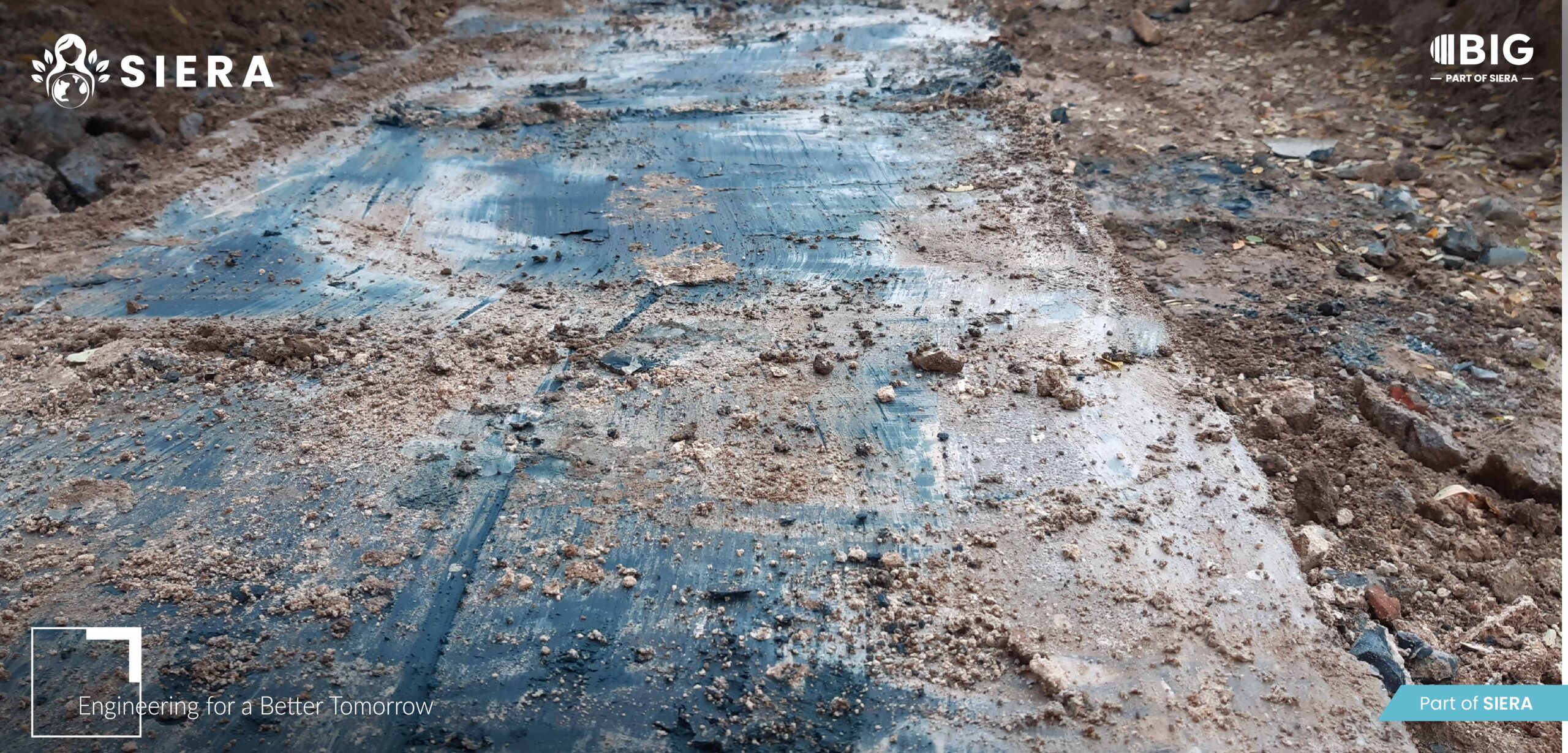
The hardened sealing wall material, on the other hand, has limited inherent strength and is therefore sensitive to mechanical damage. Cracking can therefore occur under stress. The fracture pattern of the hardened blue-grey compound is clod-like and cannot be produced in a controlled manner or precisely modelled.
Options for subsequent curtailment
In the unfavourable case of a subsequent redesign and change of use of a site secured by a cut-off wall, it may be necessary to shorten or straighten the cut-off wall in the near-surface head area even years after the cut-off wall has been constructed.
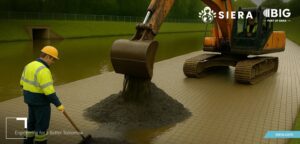
As the aforementioned properties mean that the functionality of the sealing wall cannot be guaranteed if it is removed using an excavator or chiselling with a chisel, a method that guarantees the structure and integrity of the sealing wall must be used. The use of conventional concrete saws is ruled out here, as the diameter of the saw blade means that it must have a radius of over 60 cm, i.e. a diameter of over 1.2 m, when used on one side. This makes handling more difficult and requires a sufficiently wide excavation pit as well as fastening options for the saw and the rotating saw blade.
An alternative is therefore sawing by means of a rope pull method, in which a diamond-coated rope enables the sawing process. The cable loop is pulled through the hardened sealing wall compound via deflection rollers and the sealing wall is cut at the desired point. If there are any remnants of the guide walls, these can also be „sawn through“ without any problems. The process is made more difficult by the fine-grained nature of the sealing wall compound (clay content), which, together with the water used for the cooling process, can lead to a lubricating film on the drive.
Conclusion
The subsequent processing of sealing wall heads requires a deep understanding of the material properties as well as precise, gentle processes. BIG has the necessary engineering experience in civil engineering to reliably maintain the long-term protective function even when intervening in existing sealing structures.
👉 Are you planning to remodel a contaminated site?
Talk to the experts from BIG- Member of the SIERA Alliance about customised solutions in the areas of sealing walls, remediation of contaminated sites and special civil engineering.
Engineering For A Better Tomorrow